
Housing Society

  1. Home
  2. Housing Society

Free solar advice
just a click away

Get genuine advice from our solar experts.
No pressure, book only if you are satisfied!

What system capacity is right for our society?

Three parameters determine the right solar system size:

Electricity bill

How many units do you consume each month on each common area meter? *1 kW solar = 1,400 units/year

Rooftop space

How much square feet of shadow free rooftop solar space is available in your building? *1 kW Solar = ~80-100 sq ft

Discom policy

Solar system capacity cannot exceed your meter's sanctioned load *Solar Capacity <= ~Sanctioned Load (*50kW limit for LT Meters)

Let’s take the example of a housing society that consumes 35,000 units/year.

  • The society’s unit consumption/year: 35,000 units
  • Units generated/ kW/ year: 1,400 units
  • Suitable solar system size for this society: 25 kW (35,000/1,400)

We ensure quality with leak-proof mounts, high safety, and regular expert maintenance.

We helpyou securing society AGM Approval for Solar Installation

The Indian government provides subsidies of up to ₹90 lakh for housing societies installing rooftop solar under the PM Suryaghar Muft Bijli
Yojana. Recently, the subsidy amount was doubled to ₹18,000 per kilowatt (up to 500 kW) specifically for RWAs. If you choose to go with subsidised panels,Rolling Energy will assist with all the necessary paperwork, making the process smooth and hasslefree.

Frequently Asked Questions

Now you can receive up to ₹90 lakh in subsidies for rooftop solar! The Indian government has doubled the subsidy to ₹18,000 per kW (for systems up to 500 kW) for RWAs under the PM Suryaghar Muft Bijli Yojana, covering all necessary government permits.
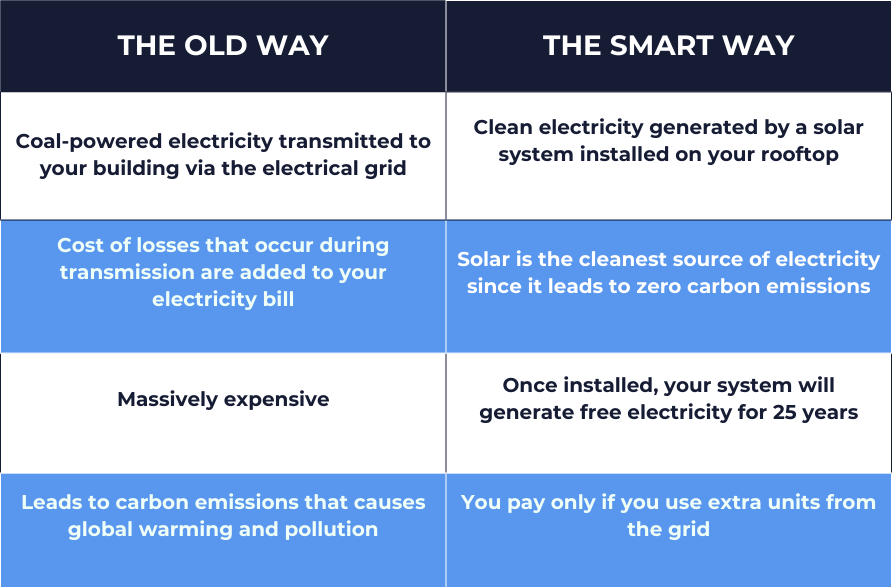
At Rolling Energy, we take care of everything for your rooftop solar project—from designing and installing to maintaining your system. We also handle all the necessary government permits for you.

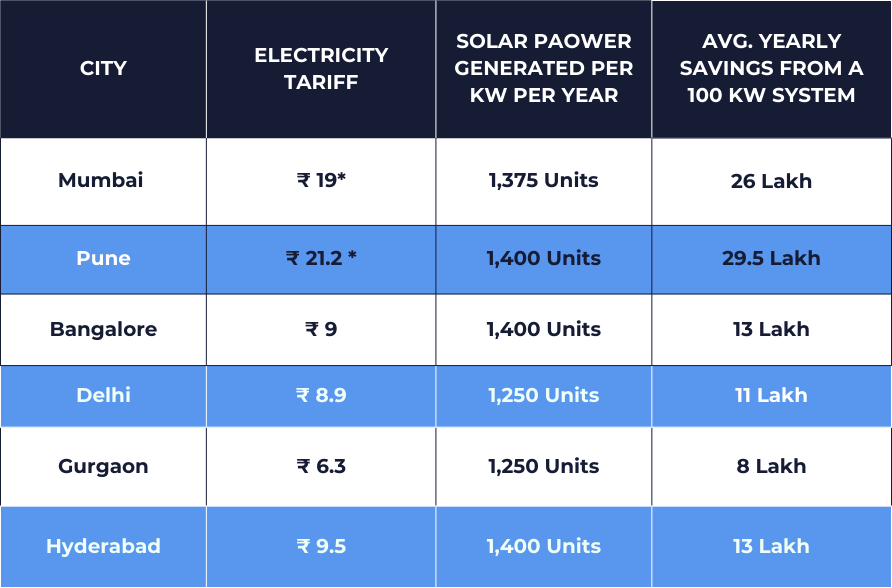
Your actual savings will depend on four key factors:

  1. Current electricity usage: How much energy you use now.
  2. Electricity rates: The cost of electricity in your area.
  3. Size of your solar system: The capacity of the solar panels you choose.
  4. Your location: The amount of sunlight your area gets.

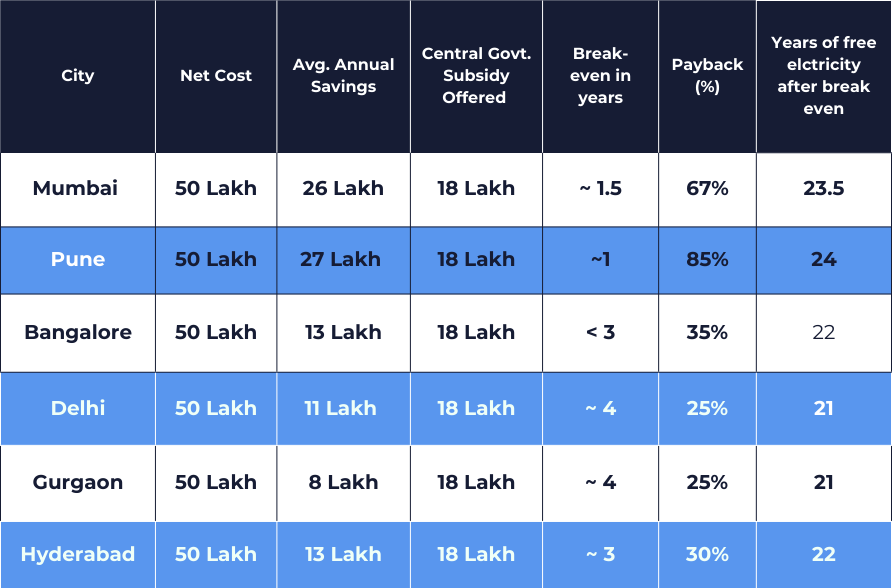
Average yearly savings to expect

Important Note: Cities like Mumbai, Delhi, and Gurgaon experience lower power generation due to high pollution and aerosols in the air.

You can expect to break even on your solar investment in about 1 to 4 years. This timeframe depends on:

  • The electricity rates in your area
  • The components you choose for your system

Here’s the average break-even period for a 100 kW system in cities like Mumbai, Pune, Bangalore, Delhi, Gurgaon, and Hyderabad.

Please note: This pricing is just for reference and explanation. Your actual solar price will vary based on your roof, design, components, and other factors.

To find the right size for your solar system, you need to consider three main factors:

  1. Electricity Bill
    How many units do you use each month on your common area meters?
    Note: 1 kW of solar generates about 1,400 units per year.

  2. Rooftop Space
    How much shadow-free rooftop space is available in your building?
    Note: 1 kW of solar requires approximately 80-100 square feet of space.

  3. Discom Policy
    Your solar capacity can’t exceed your meter's sanctioned load.
    Note: Solar Capacity should be less than or equal to your Sanctioned Load (with a 50 kW limit for LT Meters).

Example:

For a housing society that consumes 35,000 units per year:

  • Annual Unit Consumption: 35,000 units
  • Units Generated per kW per Year: 1,400 units
  • Recommended Solar System Size: 25 kW (35,000 units / 1,400 units per kW)
  1. 1. Create a Solar Committee
    Assemble a dedicated solar committee with members like civil and electrical engineers and the treasurer. This team will:

    • Explore different vendor options and compare quotes.
    • Prepare a budget and calculate the expected return on investment (ROI).
    • Present the budget and ROI during the Annual General Meeting (AGM).

    2. Get Initial Approval
    Secure agreement from all management committee members to move forward with the solar project within the budget discussed at the AGM.

    3. Issue a Request for Quote (RFQ)
    To ensure fair vendor selection, issue an RFQ after getting AGM approval. This will:

    • Level the playing field for all vendors.
    • Standardize the materials required.
    • Make it easier for the management committee to compare quotes.

    4. Educate Residents
    Share informative reading materials or a solar presentation before meetings to help everyone understand and build support for the project.

    Pro Tip:
    Rolling Energy can help your society draft RFQs and provide ready-made templates to streamline the process!
An on-grid solar system is the best option for many. Here's why:

  • Connected to the Main Grid: This system works only when it's linked to the main power grid.
  • No Backup During Outages: It can't prevent power cuts since it depends on the grid for energy.
  • Lower Initial Cost: You save on upfront expenses because there's no need for battery storage.

Benefits for Housing Societies:

  • Net Metering: You can enjoy solar energy benefits without the extra cost of battery storage thanks to net metering.
  • Subsidies Available: Housing societies can receive subsidies specifically for on-grid systems.

Two main choices of module technologyare monocrystallineand bifacial solar panels.

or inverter technology, your options include string inverters and micro-inverters.
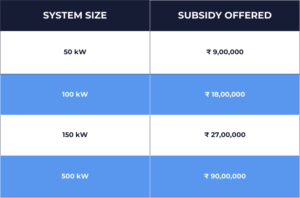
 

The Indian government provides housing societies with subsidies of up to ₹90 lakh for rooftop solar installations. Recently, the government doubled the subsidy to ₹18,000 per kW (for systems up to 500 kW) under the PM Suryaghar Muft Bijli Yojana. This subsidy applies to made-in-India DCR solar panels for common facilities.

However, many housing societies prefer imported bifacial or mono PERC panels from leading brands because they generate more power compared to the made-in-India DCR panels. Unfortunately, these imported panels are not eligible for the subsidy.

If you decide to go for the subsidized panels, Rolling Energy is here to assist you with all the necessary paperwork!

Subsidy for Housing Societies

We provide 100% solution for housing societies with no hidden costs